
The Quiet Medicine of Story: How Oral Storytelling May Help Older People Feel Less Alone
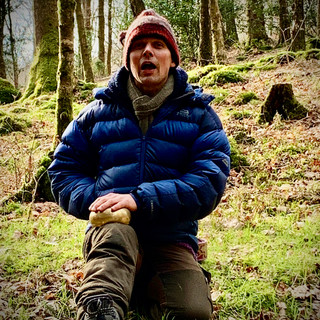
Recently, I began noticing something unexpected.
Each week I share an orally told nature story online. They are simple stories, really — stories about dandelions, blackbirds, forgotten folklore, old trees, childhood wonder, and the small sacred details hidden inside ordinary life.
At first, I thought people simply enjoyed listening.
But over time, more and more older listeners began writing to me, and the messages carried a depth of feeling I had not anticipated.

The messages were not only about entertainment. People spoke about calmness, memory, companionship, wonder, anxiety, depression, loneliness, and emotional comfort.
The more I read these reflections, the more I began wondering whether oral storytelling might be offering something deeper than I had understood.

As I started researching ageing, reminiscence, wellbeing, loneliness, and arts-in-health, I noticed something striking. Many of the feelings listeners described echoed themes repeatedly discussed in research around healthy ageing.
Researchers increasingly recognise that emotional wellbeing in later life is closely connected to memory, imagination, social connection, meaning, and emotional regulation. The World Health Organisation’s major review into arts and health found growing evidence that creative engagement can positively support wellbeing, quality of life, and loneliness across the lifespan.What fascinated me was how naturally oral storytelling seemed to touch all of these areas at once.
Perhaps this should not surprise us.
Human beings lived with oral storytelling for thousands upon thousands of years before we ever lived with screens. Stories once carried ecological knowledge, ancestral memory, seasonal rhythms, moral understanding, and communal identity. They helped people remember who they were in relation to land, to each other, and to the wider living world.

Perhaps this is why storytelling still reaches something so deep within us. Maybe some part of us still remembers.
What stayed with me most strongly in these messages was the recurring language of slowness and calm.
Again and again, older listeners described the stories not simply as entertaining, but as regulating. One woman told me that listening to the stories calmed her anxiety whilst she sat with a cup of tea. Another, recovering from surgery and struggling with depression brought on by chronic pain, wrote to say that the stories had lifted her spirits during a very dark year.

At first, I saw these messages simply as moving reflections. But the more I sat with them, the more I began wondering whether oral storytelling offers something modern life increasingly struggles to provide: sustained, gentle attention.
Modern digital culture fragments the mind. We are pulled constantly between notifications, scrolling, headlines, urgency, and noise. Many older people speak quietly about feeling exhausted by this pace of life, as though the world has accelerated beyond a rhythm the human nervous system was ever designed to comfortably inhabit.
Oral storytelling moves differently.
A story unfolds at the pace of breath. One voice. One image. One thread of meaning followed slowly through time. There is no pressure to react instantly or divide attention between multiple things at once.Research into mindfulness and nervous system regulation increasingly suggests that slow, focused attention can help reduce anxiety and support emotional regulation. Rhythmic speech and immersive listening can calm the nervous system in ways not entirely unlike meditation.
When one listener wrote:

I realised she may have unintentionally articulated something profoundly important.
Perhaps storytelling functions as an antidote to overstimulation.
Some thinkers have begun describing practices like this as forms of “slow media” — experiences that resist the fragmentation, speed, and attention extraction of digital culture by inviting depth, reflection, and sustained presence instead. Not because it allows people to escape life, but because it briefly restores a slower and more human rhythm of attention. For older adults navigating grief, illness, isolation, pain, or uncertainty, that kind of emotional shelter matters deeply.
Alongside calmness, another theme emerged repeatedly throughout the messages: the return of wonder.
Several older listeners described feeling transported back into childhood whilst listening.


What struck me about these reflections was that people were not simply remembering childhood intellectually. They were re-entering its emotional atmosphere.
As people age, life can become increasingly practical and medicalised.
Days become organised around routines, medication, appointments, responsibilities, and loss. Wonder quietly disappears from many lives, not because people cease needing it, but because adulthood slowly trains us away from awe, imagination, and attentive presence.
Yet psychologists studying ageing increasingly emphasise the importance of imagination, meaning, and emotional vitality in later life. Human beings do not outgrow the need for enchantment. This may be one reason storytelling remains so powerful. A story creates temporary space outside the utilitarian logic of modern life. It allows people to feel curiosity again. Anticipation. Emotional openness. The simple pleasure of listening without needing to perform, achieve, or optimise.

In this sense, oral storytelling may reconnect older listeners with what some psychologists describe as the “inner child” — not in a sentimental sense, but as a restoration of wonder, playfulness, emotional aliveness, and imaginative freedom. And interestingly, this return to wonder often seemed to awaken memory too. Perhaps this is because wonder itself sharpens attention. When people become emotionally present to the world again — to birdsong, flowers, stories, weather, memory, and imagination — forgotten parts of life often begin resurfacing alongside it.
Many listeners also spoke about memory.
One woman told me the stories reminded her of her father who had passed away years earlier. Others spoke about gardens, flowers, birdsong, and landscapes they had not thought about in decades.
Researchers in gerontology have long explored the importance of reminiscence in later life. Emotionally meaningful autobiographical memory helps people maintain continuity of identity across time, particularly during periods of transition, ageing, illness, or loss.
What interests me is how naturally nature stories seem to awaken these memories.
Certain sensory details — birdsong, flowers, changing seasons, gardens, weather, folklore, and childhood landscapes — appear capable of opening emotional doorways deep inside memory.

What moves me most is that the memories people describe are rarely grand or dramatic. They are often incredibly small.
The smell of soil. A parent’s voice. The feeling of sitting quietly listening. The sight of spring flowers appearing after winter.
Perhaps storytelling dignifies these overlooked moments. And perhaps older people, having lived long enough to understand how fleeting life is, recognise more clearly than most that meaning is often hidden precisely there.
But perhaps the idea that has affected me most deeply is this:
Stories may help widen lives that have slowly begun to shrink. This is perhaps the idea that has stayed with me most deeply. As people age, their worlds can gradually become smaller.
Friends die. Mobility changes. Driving stops. Children move away. Health problems increase.
The radius of daily life can narrow dramatically. For some elderly people, a day may gradually narrow into one room, one chair, one television, and one small routine repeated again and again.
But stories widen the walls.
A person sitting alone in a small flat can suddenly walk through forests, stand beside rivers, wander through childhood gardens, hear old folklore, meet talking birds, remember long summers, or feel connected to seasons moving outside the window.
And importantly, this widening is not frantic.
It is gentle.
Unlike much digital media, storytelling expands experience without overstimulating the nervous system.
It widens while calming.
That may be why older listeners respond so strongly.
Not because the stories help them escape life. But because they help life feel larger again.
And beneath many of these reflections, I sense another quiet truth.
Loneliness.
Loneliness among older adults is now recognised as a major public health issue. Research consistently links chronic loneliness in later life with poorer mental and physical health outcomes, including depression, anxiety, cognitive decline, and reduced wellbeing. What strikes me about many of the messages I receive is how relational they feel.
Not transactional.

People often write as though the storytelling itself feels companionable. A steady weekly presence. A familiar voice. A shared ritual. Perhaps this reflects something deeply ancient.
For most of human history, stories were not consumed alone. They were communal. Shared around fires, tables, fields, kitchens. Even now, hearing another human voice speak slowly and sincerely can create a surprising feeling of closeness. One listener wrote:
“I cannot remember the last time anybody read to me.”
That sentence stopped me. Because hidden inside it is something heartbreaking: Many older people are no longer regularly spoken to in ways that feel attentive, imaginative, or nurturing. Storytelling may help meet a very old human need: To feel accompanied.
I also began noticing how many people specifically mentioned nature.
Many listeners specifically mention nature: Flowers, Birds, Gardens. The outdoors.
This matters too. Research into nature connectedness increasingly shows strong links between nature engagement and wellbeing, including reduced stress, improved mood, and greater feelings of meaning and belonging. Nature stories may work in a uniquely powerful way because they weave together memory, imagination, sensory imagery, emotional symbolism, and seasonal rhythms. Nature herself moves slowly. She teaches attention. A dandelion is a tiny thing. But to truly see one requires stillness. Perhaps storytelling about nature gently invites people to notice life again.
What fascinates me too is where all this is happening- online!
There is also something quietly strange and beautiful about all this happening through social media. We often speak about platforms like Instagram and Facebook purely as engines of distraction, overstimulation, comparison, and algorithmic consumption.
And often they are.
Yet inside these fast-moving digital spaces, something ancient is quietly re-emerging.
Thousands of people stopping to listen to one human voice telling one story slowly. In many ways, this feels almost paradoxical. The very technologies often blamed for fragmenting attention are simultaneously becoming vessels for slowness, reflection, memory, and emotional connection. Perhaps this tells us something important about human beings.
Maybe beneath all the speed, people are still hungry for the kinds of experiences oral storytelling once offered naturally within village life and communal culture:
attentive listening
emotional closeness
shared imagination
seasonal awareness
and the simple feeling of being gathered together through story.

And perhaps older people — having witnessed decades of accelerating modern life — feel this hunger more than others.
The more I sit with all of this, the more I think oral storytelling offers a quiet kind of healing. I do not want to overstate the science. Storytelling is not a miracle cure. It cannot remove grief, illness, pain, or loneliness entirely. But increasingly, research suggests that narrative, arts engagement, reminiscence, imagination, and social connection all play meaningful roles in healthy ageing and emotional wellbeing.
And sometimes healing is not dramatic.
Sometimes healing looks like feeling calmer for ten minutes, smiling during a difficult day, remembering a parent fondly, feeling less alone, reconnecting with wonder, sharing a story with grandchildren, or being transported briefly beyond the walls of a room.
Perhaps stories do not solve ageing.
Perhaps they simply help people remain fully human within it.
And honestly, that feels important enough. What these older listeners have reminded me, more than anything else, is that storytelling was perhaps never merely about entertainment.
At its heart, storytelling has always been about accompaniment. About helping people feel less alone as they move through the great transitions of being human.
And perhaps, in a world increasingly characterised by speed, distraction, loneliness, and disconnection, that ancient role matters now more than ever.
I’d love to hear your thoughts! Feel free to join the conversation in the comments below—your questions, stories, and perspectives are always welcome. Whether we agree or not, every discussion adds depth to these conversations, and respectful dialogue is what makes this space truly valuable.
If you enjoyed this post, consider subscribing to The Lucid Hare Blog so you never miss a new piece. And if you know someone who cares about childhood, nature, and play, please share this with them—we grow stronger when we think and learn together. Let’s keep the conversation going!
References and Further Reading
World Health Organization. (2019). What is the evidence on the role of the arts in improving health and well-being? A scoping review. WHO Regional Office for Europe. https://www.who.int/europe/publications/i/item/9789289054553
Müller, F., et al. (2022). Digital storytelling interventions for older adults: A systematic review.https://pmc.ncbi.nlm.nih.gov/articles/PMC8792772/
Phillips, L. J., et al. (2010). TimeSlips: Creative storytelling, health, and dementia care.https://pmc.ncbi.nlm.nih.gov/articles/PMC3010410/
Fancourt, D., & Finn, S. (2019). Health Evidence Network synthesis report: Cultural engagement and health. WHO.
Narrative Gerontology: Concepts and research exploring storytelling, identity, ageing, and reminiscence in later life.
Research areas relevant to this topic:
reminiscence therapy
narrative gerontology
bibliotherapy
arts in health
storytelling and dementia
slow media
nature connectedness and wellbeing
loneliness and ageing


Comments